
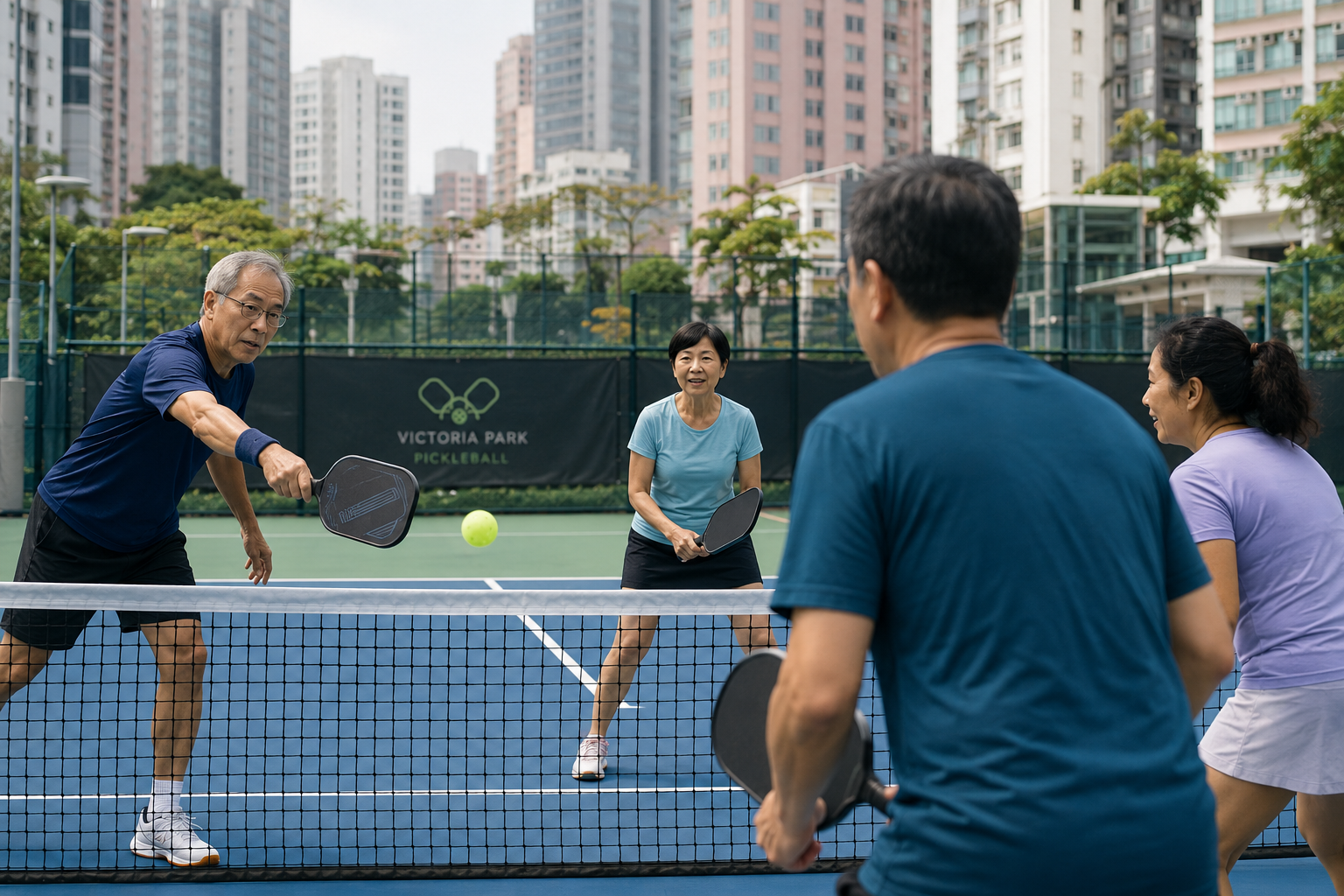
Can pickleball reverse ageing? No, but a new randomized trial from Hong Kong found something that deserves attention.
After eight weeks of supervised pickleball, 42% of older adults who began the study with pre-frailty no longer met the pre-frailty criteria. In the control group, the figure was just 8%.
That does not mean pickleball made anyone biologically younger. It does suggest that regular play may improve some of the physical abilities that become increasingly important as we age.
First, what does "pre-frail" actually mean?
Frailty is not simply another word for being old. It describes a decline in physical reserve, which can leave someone with less capacity to recover from a fall, illness, hospital stay or other stress on the body.
Pre-frailty is the earlier warning stage. Someone may show one or two signs such as:
- Reduced strength
- Slower walking
- Low physical activity
- Exhaustion
- Unintentional weight loss
A person with pre-frailty is not necessarily frail, but their physical reserve may be starting to decline. That makes this stage particularly interesting to researchers because there may still be an opportunity to improve it.
What the Hong Kong researchers did
The 2026 randomized controlled trial followed 72 community-dwelling older adults with pre-frailty, with a median age of 67. Researchers randomly assigned them to either a pickleball programme or a control group.
The pickleball group completed:
- One-hour supervised sessions
- Two sessions per week
- Eight weeks of play
The control group continued its usual lifestyle. Because participants were randomly assigned, the study provides stronger evidence than a survey of people who already choose to play pickleball.
The headline result: 42% moved out of pre-frailty
After eight weeks:
- 15 of 36 participants in the pickleball group moved to non-frail status
- 3 of 36 participants in the control group moved to non-frail status
That works out to roughly 42% versus 8%.
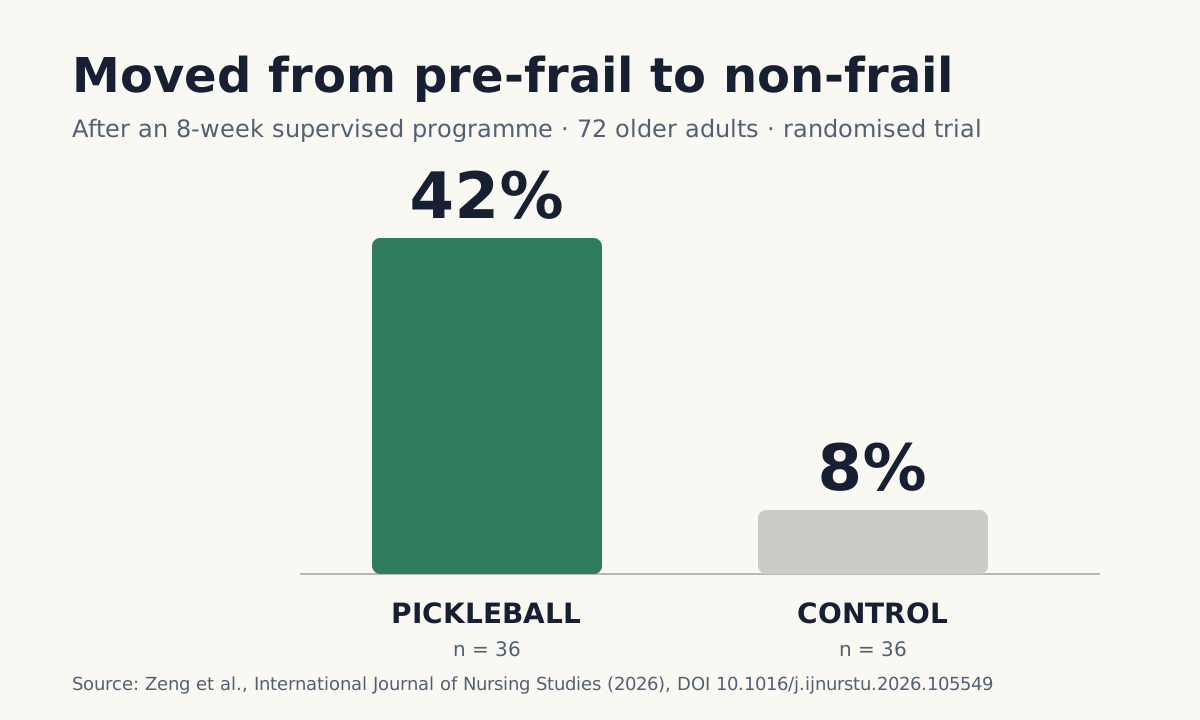
This is the finding most likely to generate headlines, but it needs to be interpreted carefully. Moving from pre-frail to non-frail does not mean ageing reversed. It means that when researchers assessed the physical criteria again, those participants no longer crossed the study's threshold for pre-frailty.
That is still meaningful. If declining strength, activity and mobility can be improved before someone progresses further towards frailty, it could have important implications for healthy ageing.
It was not just the frailty score
The pickleball group also improved across several measures of physical function. Researchers reported improvements in:
- Chair stands
- Arm curls
- Flexibility
- Six-minute walking distance
- Light physical activity
- Sedentary time
- Physical quality of life
- Mental quality of life
Many of these tests reflect abilities people use outside a sports setting. Getting out of a chair, walking for longer periods and maintaining strength are practical markers of independence as people age.
Pickleball also makes the body react
There may be another reason pickleball is interesting for older adults. Walking or cycling usually involves relatively predictable movement, while pickleball asks players to respond to a constantly changing situation.
The ball changes direction, opponents move, and players have to track the shot, adjust their feet and decide what to do next. That makes pickleball an open-skill sport, where movement and decision-making happen together.
A second 2026 Hong Kong randomized trial looked more closely at this. After eight weeks, pre-frail older adults who played pickleball showed improved adaptability in how their hips, knees and ankles coordinated while walking under simultaneous physical or mental demands.
Not every walking measurement improved. Cadence, stride length and stepping strategy did not show clear changes, so the study does not prove that pickleball prevents falls. It does provide an interesting signal that the sport may challenge coordination in ways that go beyond simply raising your heart rate.
Why pickleball may work particularly well
Pickleball packages several types of activity into the same session. Players get cardiovascular movement from repeatedly moving around the court, while stopping, reaching, bending and changing direction challenge strength and stability. Every rally also brings hand-eye coordination and constant decision-making.
There may be a simpler advantage too: it is a game rather than a prescribed exercise routine. Some people may be more willing to keep playing because they enjoy the competition, the progress and the people around them. The theoretically perfect exercise programme is not very useful if someone quits after two weeks.
What the study does not prove
The result is encouraging, but it comes with important limits:
- The trial involved only 72 people
- It lasted eight weeks
- Participants were older adults who already had pre-frailty
- The pickleball programme was supervised
We cannot assume the same result would occur in younger adults, frail adults, completely sedentary people or someone casually playing once every few weeks. We also do not yet know whether the improvements persist for years. Larger and longer studies are needed.
Should older adults start playing pickleball?
For many people, pickleball can be a practical way to add movement, coordination and social activity to the week. But the smaller court should not be mistaken for zero physical risk. The sport still involves quick stops, lateral movement and sudden reactions.
New players should increase their workload gradually rather than jumping from inactivity to several long sessions each week. Warming up, wearing proper court shoes and building leg strength can all help. Anyone who experiences unusual chest pain, dizziness, sharp pain or severe breathlessness should stop playing, and people with significant heart, lung or mobility concerns should discuss a new exercise programme with a clinician.
The verdict
The Hong Kong research does not show that pickleball reverses ageing. It shows something more credible: in a randomized trial of older adults with pre-frailty, supervised pickleball twice a week for eight weeks improved frailty status and several measures of physical function.
For a sport many people think of as casual recreation, that is a significant finding. The paddle is not making anyone younger, but regularly moving, reacting, balancing, learning and returning to the court might help people maintain more of the physical capacity that matters as they age.
Sources
- Effects of pickleball on pre-frailty, physical fitness, 24-hour movement behaviours and quality of life in older adults, International Journal of Nursing Studies, 2026.
- Eight-week pickleball intervention and dual-task gait performance, Experimental Gerontology, 2026.
This article is general information, not medical advice. Individual health conditions and exercise needs vary.